
 913-210-6242
 10332 Mastin St, Overland Park, KS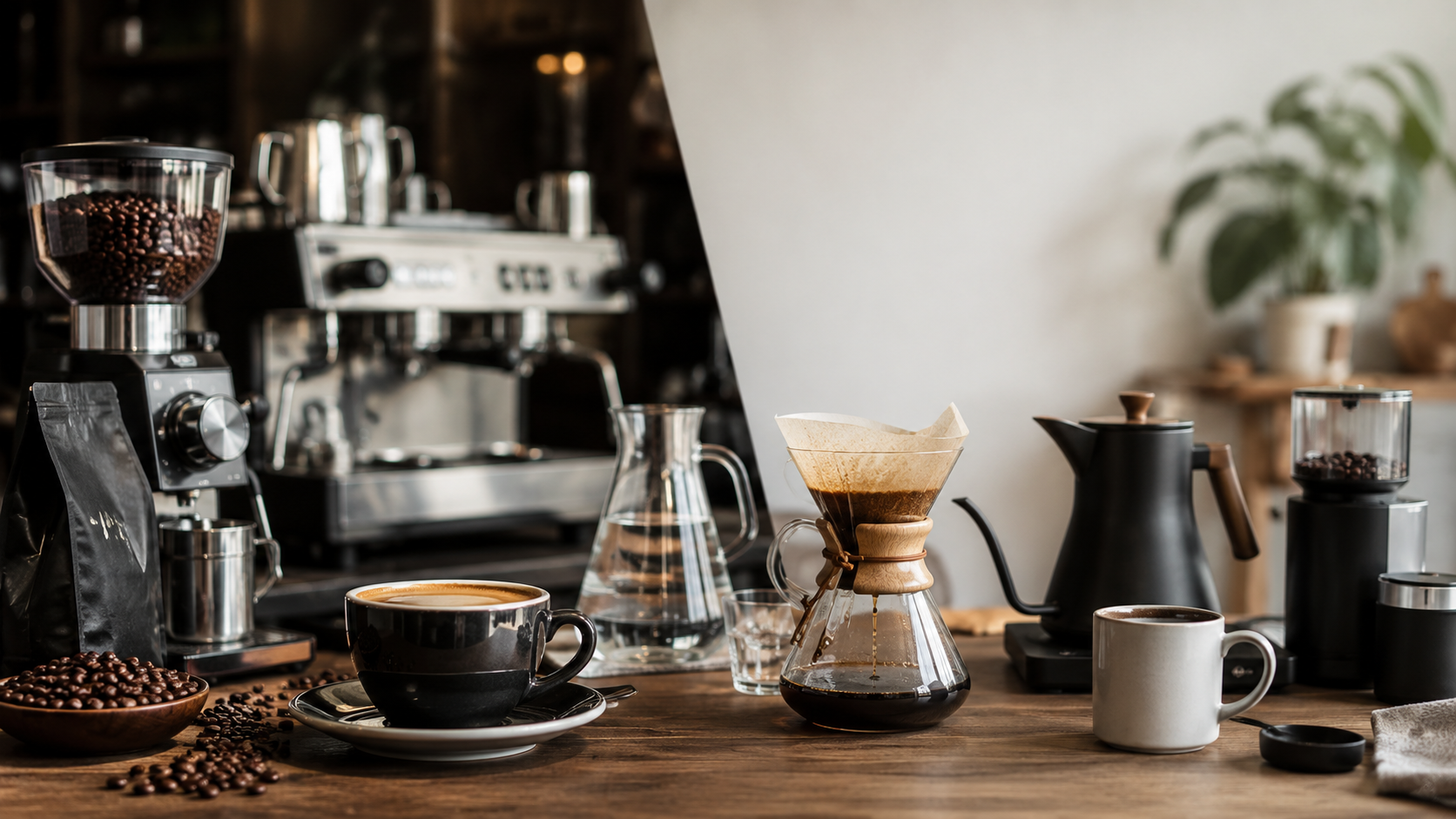
There are several reasons why that cup of coffee from your local café tastes much better than the coffee you brew at home. While you may think you're imagining it, there are many different variables that play into the superior taste of coffee made professionally.
The biggest difference between café coffee and home brewed coffee is the freshness of the coffee beans used to make them. The majority of professional coffee shops serve their customers quickly and regularly go through their coffee inventory. Many roasters have fresh roasted beans that are delivered every week or bi-weekly. Most coffee shops understand that roasted coffee beans start losing their optimal freshness within two to three weeks after being roasted.
Typically, the bag of coffee sitting in your pantry has probably been there two or more months. Coffee is a perishable item, and once it has been exposed to air, light, and humidity, it will begin to stale. Most coffee shops store their coffee beans in containers that have been sealed tight and are kept away from light and heat. Most coffee shops also replace their coffee beans fairly often. Because of the coffee shops' commitment to freshness, a cup of their coffee will be brewed from beans that are at their freshest and have the best flavour.
Although you may not think about the grind size of coffee to be a very important aspect of brewing coffee, it is one of the key components of producing quality coffee. The size of the grind has a large effect on how well coffee is extracted.The reason behind the high investments coffeehouses make in commercial-grade burrgrinding equipment is simple: there is a great benefit associated with these types of machines.
Why is Grind Quality Important?
Burr grinders produce coffee grounds of consistent size; therefore, they will allow the most efficient extraction of coffee during the brewing process when using a burr grinder. With even grind size, water passes evenly through the ground coffee when it is brewed, allowing for perfect extraction of soluble nutrients, oils, and sugars from the coffee, creating an excellent flavour balance between sweet, sour, and bitter profiles. Burr grinders also enable the production of coffee grounds that retain the highest flavour levels possible without over or under-extraction or creating a bitter aftertaste.
Blade grinders, along with many other types of coffee grinders, produce ground coffee that are often inconsistent in size; this inconsistency can create an undesirable flavour when brewed. When using a blade grinder, some of the ground coffee may be powdered extremely fine, while other pieces may still have a chunky texture; therefore, there is an extreme difference in how much flavour is extracted from the coffee. Additionally, baristas also adjust their grinder settings throughout the day, depending on the moisture level and freshness of the beans. This is another area that most home brewers do not consider adding when determining the appropriate grinding settings.
Water Quality: The Unsung Hero
Water is an essential component of coffee, as it is approximately 98% of the beverage; yet, it is often neglected when selecting coffee for home brewing. On the contrary, the majority of commercial coffee shops do not leave their water quality to variable environmental conditions; they are equipped with water filtration systems designed to remove chlorine, heavy metals, and excess minerals, while maintaining the correct mineral ratios. Most experienced baristas are aware that many coffee shops maintain a set of balance with TDS (total dissolved solids) levels between 75-250 ppm for brewing coffee with a balanced mineral content for creating the optimal flavour of the coffee.When you use tap water at home, you may be using water that has chlorine in it which causes the more delicate flavors to be masked or too hard for the extraction process to work effectively. Unless you have been using bottled or filtered water with the proper mineral content, you are at a disadvantage for brewing coffee.
The Power of Commercial Espresso Machines
One of the most prominent differences between home brewing and coffeehouse brewing is the equipment. Professional espresso machines are often sold at a premium price ranging anywhere from $5,000 to $20,000+. In addition to the cost difference, commercial espresso machines produce a quality of product that cannot be matched by most machines used at home.
Temperature Stability and Pressure Consistency
The other major difference between commercial machines and home machines is that commercial machines maintain precise temperature stability—the temperature of the water used to extract espresso generally remains between 195-205°F (+/- 1 or 2 degrees); home machines can fluctuate greatly in temperature. Another significant difference between commercial and home espresso machines is that commercial machines produce a consistent 9 bar of pressure, which is necessary for a quality espresso extraction. Even small changes in temperature will result in very different extraction and flavor profiles.
Additionally, professional espresso machines have multiple boilers; this allows baristas to produce steamed milk while pulling shots without the boiler temperature fluctuating due to pressure or temperature drops. By having volumetric controls on the machines, the barista knows exactly how much water to inject into every shot; thus, eliminating uncertainty and variability that can greatly hinder home brewing methods.
The Human Factor
Lastly, we should not overlook the barista's experience and skill. Baristas train for many hours learning how to adjust grind size settings on the espresso machine, how to weigh their coffee, how to tamp their coffee, and how to monitor the extraction times of the espresso. They have developed an understanding of how all of these variables work together and how to fine-tune the variables as they extract espresso.
This combination of experience and training, in addition to the fact that they are pulling hundreds of shots of espresso each week, leads to a consistency of espresso that is very difficult to replicate at home, where you may only brew a cup of coffee once or twice a day.
Achieving Cafe-Quality Espresso at Home
While achieving true coffeehouse quality at home will require you to invest in the right equipment and to practice with the equipment, now that you know these factors, you will be able to make significant improvements in your home brewing. If you purchase high-quality, fresh roasted coffee, invest in a high-quality burr grinder, use filtered water, and learn how to properly brew coffee, you can produce a cup of coffee that may not be as good as the coffee from your favorite coffeehouse but will undoubtedly be far better than you expect.
Comments
Please sign in to leave a comment.